Friday, February 24, 2017

Virunga


Virunga 

Virunga National Park, in the Democratic Republic of the Congo, is home to the last Mountain Gorillas in the wild.  The documentary “Virunga”, details the lives and efforts of those who have sworn to protect the park from outside threats.  These threats vary from poachers to those in control of Congo’s natural resources.  Andre Bauma, the caretaker of orphaned gorillas, has dedicated his life to ensure that the gorillas affected by the enemies of the park will have a safe and full life.  It is up to the National Park Rangers, however, to protect the gorillas and prevent the baby gorillas from ever being orphaned.  The struggles that the park faces is that the poachers and militias that threaten the gorillas, have more funding for weapons than the rangers.  During the filming of the documentary, a newly formed rebel group declared war, leaving the filmmakers caught in the crossfire (virungamovie.com).  The comprised film outlines the established threats against the park, as well as firsthand coverage of a surfacing peril.  One can help the park with its lack of funding by going to the movie’s website and contributing through a single monetary gift or a monthly donation.   “Virunga” does an incredible job of covering the recent crises in the DRC, informing the public about these important issues, and helping to do something about it.
The tragedies surrounding Mountain Gorillas and other endangered species is nothing new to the continent of Africa or the world in general.  However, the number of gorillas dropped so low in 2008, that the species was dubbed “critically endangered” by the International Union for Conservation of Nature (IUCN).  Since then, the population has been steadily increasing thanks to the conservation efforts of the park.  Although the documentary is focused around the dangers that the gorillas and the park faces every day, director Orlando von Einsidel had traveled to the DRC, in 2012, with intentions of detailing the progress made in replenishing the Mountain Gorilla population.  He and the crew shifted their focus toward the new threat that arose shortly after their arrival.  In order to reach more people and particularly the younger generation (who are more impressionable), the documentary was distributed by Netflix, the world’s largest movie supplier.  The film was received extremely well and earned itself a nomination for Best Documentary at the 87th Academy Awards


Von Einsidel and his crew had originally intended to produce an uplifting documentary about the resilience of the Mountain Gorilla and the bravery of the men that protect them.  This all changed when they realized that there was a bigger storyline at hand.  The documentary turned into a medium to alert the public about the dark forces that endanger the lives of these gorillas.  With Leonardo DiCaprio as its executive producer, the film held a certain ethos when it was presented to the public.  Included in the film are plenty shots of baby gorillas playing with toys and other cute scenes that would make the coldest of hearts fall in love with these animals.  With no main narrator, the film feels unbiased and allows the viewer to take in all the information and form their own opinion on the topic. 

For the reasons above, and for my bias toward movies featuring animals, I have given this documentary 5 out of 5 stars.

Ballet 422


Ballet 422


           The New York Times describes the documentary Ballet 422 as “A Fly on the Wall, Watching a Troupe Work Toward Seamless Grace” https://www.nytimes.com/2015/02/06/movies/ballet-422-captures-justin-peck-and-city-ballet-in-creative-motion.html . The film follows Justin Peck, a 25-year old choreographer living in New York City who is the only active dance member of the company to choreograph an original ballet on current company dancer. Through his journey, we realize that there is a great deal of stressed placed on the choreographers of this prestigious company. Work does not stop when the studio lights are turned out with today’s technology, but rather follows the choreographer, a necessary perfectionist, home.

                        The context of the film has to do with the trials and tribulations of being a young and active choreographer. The issues I found with this documentary, being a dancer myself, was the lack of focus on the actual bonding between choreographers and their dancers. It was made to seem as though he was nothing but their boss and that the only one enjoying the movement was the lead dancer, but this is never the case. The documentary also includes aspects such as costume design, lighting design and the coagulation of ideas to reality.

            The people that this movie is targeting are in the 10-40 year old demographic and mostly appeals to women, but with the introduction of Justin Peck, there seems to be more of a draw towards men. The dance industry is defiantly a large portion of the viewers because they are the most interested in the high prestige of New York City Ballet. On top of this, Justin Peck is a big name in the dance world, so the fact that he is the first to choreograph a piece is amazing. It seems as though the purpose of this was to shed some light on the reality of the companies work ethic.

            According to “How Real Does it Feel?”, the concept of amateur filmmaking and improvised acting with low budget equipment is referred to as mumblecore (New York Times) http://www.nytimes.com/2010/12/12/magazine/12Reality-t.html?pagewanted=all . In some senses, Ballet 422 borrowed the practices of mumblecore. The documentary was filmed with mostly amateur film tactics but did not include any acting, improvised or not. The film was made to be from the perspective of Justin so amateur tactics were used to better relate to simplex lifestyle of a dancer in NYC. All in all, there were many issues with the documentary when it came to proper coverage of the relationships, but from a choreographers standpoint, it did tdo a good job of covering the difficult and stressful times and tasks .


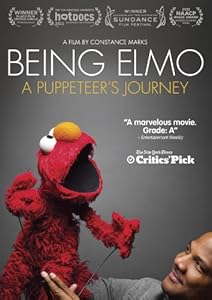
Being Elmo

Image result for being elmo


Being Elmo is the story of how a young boy named Kevin Clash followed his dreams to become the famous puppeteer behind the beloved Sesame Street character Elmo. The documentary premiered at the 2011 Sundance Film Festival and received a 95% rating on Rotten Tomatoes.
Whoopi Goldberg narrates how Clash grew up in a lower class neighborhood in Baltimore, where he would dream of going to Disney World to escape his reality, but his family could never afford it. Young Kevin would watch puppet shows on TV and then sew his own sock puppets and muppets, giving them eyes, a voice, a personality, and bringing them to life in his backyard, where he would host puppet shows for the neighborhood children. From a young age he had a passion, which turned into a talent; however, as a high school student he would get bullied and teased for "playing with dolls." If it wasn't for his parents' constant support of his dream, he wouldn't have become as successful as he is, This is an important message for parents watching this film, to support their children's aspirations whatever they may be. Kevin Clash did not go to college, yet he is today the man behind Sesame Street, a name familiar to generations. Besides parents, the audience of this film is also young teenagers, because it conveys the message that if you do what you love and never give up, no matter where you come from or what you look like, you can be successful.
The purpose of this film is to give credit to Kevin Clash, because everyone can recognize Elmo, but no one knows of the amazing human behind the popular character. Much of the point of view is from Kevin himself, who through interviews, shares anecdotes of his journey. His mother also is a main source of his story, because she knows him better than anyone else; this makes the documentary more authentic, yet also a bit bias because as a mother, she will only have positive things to say about him.
Although the movie was a success story, I felt like there were a lot of things missing. For a documentary about a person, the movie never touched on his personal life. It never touched on his race, his love interests, or any tragedy that might have happened in his life. For the most part he was very lucky and faced little to no obstacles throughout his journey. This made it seem unrealistic, as it was a tale too good to be true, a Horatio Alger myth if you will. For this reason I give it 3 stars.


Image result for three stars


Selling the Girl Next Door Documentary


Selling the Girl Next Door discusses the issues of child prostitution and exploitation. Viewers are introduced to Salina and 
her mother. Salina is 13 years old and had only lived in Las Vegas for a few months when she began running away. Runaways are frequently targeted by sex traffickers and sadly Salina became another victim of exploitation and prostitution. Host Amber Lyon dives into the issues surrounding the ease of buying and selling underage girls on the internet, visits the infamous brothel The Bunny Ranch, and speaks about what is being done to help these victims of sex trafficking. Selling the Girl Next Door packs a large emotional load into only 42 minutes. By looking at the context, audience, purpose, and point of view of the documentary we can see exactly how it manages to pack that emotional warhead. 


The exploitation of underage girls has become increasingly problematic and has evolved with the internet tools now available. The time during which this documentary was released was also during an era of evolution in prostitution via the internet. In 2012 it was estimated that 600,000-800,000 women, children, and men were trafficked and sold for sex in the United States and 50% of those were children. The DoJ website states “Technological advances, in particular the Internet, have facilitated the commercial sexual exploitation of children by providing a convenient worldwide marketing channel. Individuals can now use websites to advertise, schedule, and purchase sexual encounters with minors”. These social and technological developments set the stage for this documentary to be able to focus largely on what was happening right then.


I think that Selling the Girl Next Door was really aimed at parents. Many people in this country do not know that this is happening. In order to protect young girls from this atrocity their parents have to be aware that it is happening. This documentary makes the message quite personal as well using the point of view that it is told from. Additionally, airing on CNN encourages primarily adult and/ or parent viewership. 

This documentary wants to affect change. I mentioned earlier that the creators of the documentary want to make the message personal. For many people this documentary serves as an eye opener. For people who know of the problem but only generally this documentary gives great insight into what life is like from beginning to end for these children who end up being sold into prostitution. Unfortunately the creators did not include specific information in the documentary on how people can help solve this problem which I think would have been very worthy content to include. This documentary primarily uses pathos but also includes elements of logos and ethos. There is an element of logos from CNN who produced and presented the documentary. The choice to include first hand accounts of what life is like as a child prostitute from girls and women who have experienced it also add to the ethos of the documentary. While these women don’t necessarily have degrees or titles they do have very real first hand accounts of what their lives were like. Aside from the argument that child prostitution is a very real problem this documentary also makes the argument that there is a problem with the systemic treatment of victims of child prostitution. The pathos connected with seeing a child or anyone talk about their experiences with being sold for sex and locked up in a detention center for simply being a victim are incredibly strong. 

Selling the Girl Next Door was produced by Steve Turnham and Courtney Yager as part of the CNN Special Investigations and Documentaries unit. While the original airing of the documentary on cable TV could have limited the initial audience, the documentary is currently available to stream for free on multiple documentary websites and YouTube. While specific viewer statistics for this particular program are not available we can a good majority of CNN viewers who might have watched this program are within the ages where it is common to have children or grandchildren given that  Only 23% of CNN viewers are under 30 years old. Throughout the documentary the include interviews with men who have been arrested for soliciting prostitution as well as a young girl who was sold into prostitution and her mother. The interviews with Salina and her mom, as mentioned earlier, serve to really personalize the issue and create empathy for the victims of sex trafficking. The interviews with the “johns” also create a feeling of disgust and disbelief at some of the things they say.

I think this is a good introductory documentary to the issue of child prostitution. Parts of the documentary were less than satisfying because it touches on several issues but doesn’t give any details or potential solutions. Overall, I find it to be an engaging documentary that prompts further thought and research but not a terribly comprehensive documentary. 


Code Black


Code Black is a 2013 documentary that chronicles events at the Emergency Department of LA County Hospital, the busiest ED in America.  We follow the lives of a team of resident doctors as they strive to care for all of the patients that flood their waiting room during “code black”—when the patients outweigh the resources of the ED.   Code Black proved to be very successful, winning best documentary at the LA film festival.  This film aims to expose the problems of America’s broken healthcare system and the hardships that county hospitals face, including lack of funds to staff adequately and the poor ER conditions for patients.  
            In this film, we are shown two versions of LA County Hospital, “Old County” and “New County”, which give dramatically different impressions of an emergency department. “Old Country” is a picture of doctors working together with one goal in mind—to save their patient’s life, no hesitation.  In “New County”, the doctors are faced with many problems which this film seeks to uncover. We see them drowning in paperwork while there are hundreds of patients in their waiting room, who could have been there for close to 20 hours.  The insufficient staffing, and inadequate funds to hire enough staff in the first place, greatly contributes to this problem as well. In addition, these doctors struggle to find intimacy in their relationships with their patients, meanwhile spending twice as much documenting it.
            The prime audience for this film includes doctors, nurses, or any other healthcare worker that would be drawn to watch a medical documentary.  As a nursing student, I chose to watch this documentary because I want to be informed about the industry that will eventually employ me.  Since this film is available on Netflix, it can show up in viewers “cues” based on what they’ve previously watched, and therefore can gain viewers that way as well. The government is also a target audience for this film.  Although government regulations for medical care were implemented to protect the patient, we are shown throughout the film howthey can actually prevent care.  Resident Doctor Pomeranz states in the film, “The amount of forms that it takes to get a patient registered, taken care of, and discharged is upwards of 50 to 60… They’re trying to guarantee patient’s safety, but in doing so they’re killing the team and killing the relationship… It becomes a bucket of paperwork to save someone’s life, and it kills the passion of saving someone’s life”.  Statements like these are aimed at the government in an attempt for the them to understand how patient care is being affected.  One of the most taxing government regulations is HIPAA, which you can read more about here: https://www.hhs.gov/hipaa/for-professionals/index.html
            Doctor Ryan McGarry wrote and created this film with the purpose to inform viewers of the inside struggles of emergency departments, specifically county hospitals, and to inspire change in doctors and hospitals in the United States.  According to the film, county hospitals make up 2% of all U.S. hospitals, but provide 20% of uncompensated care.  In addition, county hospitals train approximately 1 in 5 doctors. This film sheds light on the underfunding and lack of resources in country hospitals in order to spark change and bring forth awareness., After filming had wrapped, Los Angeles county allocated more money toward the hospital in order to hire 25 new nurses.  Indeed, change is beginning to happen.
            Code Black gives a pretty narrow perspective regarding the ins and outs of LA County emergency department, and healthcare overall.  We primarily see through the lens of the ED resident doctors, such as writer and director McGarry who stars in this film himself, alongside his team of resident doctors.  It makes sense that we would hear about the nitty gritty from those who are doing the nitty gritty. We also hear from attending physicians at LA County and patients, who testify their similar frustrations regarding the “system”.  This is what leads me to believe that this film is attempting to reach the government.

            Overall, I was extremely impressed with Code Black and highly recommend this film for those whom it interests.  I would give this film 4 nachos. As a prospective nurse, I felt that this documentary gave me good insight into the healthcare world from the perspective of healthcare providers themselves.  I appreciate that the voices of those who are saving lives are being heard.


Watch the movie trailer here: 

9.79 seconds ESPN: 30 for 30

9.79, ESPN 30 FOR 30. 

The Documentary 9.79 is an episode of ESPN 30 for 30, directed by Daniel Gordon in 2012. 9.79 is a sports/track and field documentary about the 100m finals at the Seoul Olympics games back in 1988 and its controversy with drugs and cheating that went on at the games and the events leading up to it with two of the fastest men in history and there story about failing drug test, Ben Johnson and Carl Lewis who were two dominant sprinters in this day and age and had a rivalry like no other. Throughout the documentary it tells a story line of both athletes leading up two the games, including their lifestyles and sporting careers, lifestyle issues and injuries as well as a couple of the other 100m finalist that co star in 9.79.  The story reveals both stars lives, as well as a rising drug problem in track and field that started to come about the time of the Seoul Olympics, since there was a rise of sport enhancing drugs being used. 9.79 was released back in 2012, ironically the same year as the London Olympics takes place, as well as the IOC (International Olympic Council) and IAAF (International athletics association federation) under scrutiny due to covering up failed testing throughout the system.
I think this documentary has two purposes, I think the first one which is more of a story telling purpose and that’s to tell the tale of one of the greatest sporting rivalry’s and athletes there has ever been in track and field. This purpose opens the documentary to a wider audience other than track and field fans, but sporting fans in general, because who doesn’t like a good rivalry. The other purpose, which I believe to be the more important issue, specially with it being released when it did was the issue of drugs in track and field at the time and how it was getting out of hand, as you see in the documentary that 6 of the 8 athletes in the 100m final all tested positive for a sport enhancing drug and some were involved in the distribution and selling to other elite athletes. This is the ultimate juicy sporting tale. I also think this helped bring attention to the drug problem that was going on around the Olympics back in Seoul and the issue in London, that over the years nothing has really changed and that its time too. One really fascinating part of the documentary was listening to the head of the doping control from the Olympic council back in Seoul discussing the drug problem and that he personally re tested samples from back then with todays technology and the results he saw was shocking, even for him. This is a clear demonstration in the film that there’s always been a huge problem with doping, but went onto to say they are finding new ways everyday and its true since the amount of failed test in the last couple of years, particular before Rio have seen a dramatic increase.

Throughout the film, its interesting to hear directly from every athlete that was on the starting line back on one of the most historic moments in track and field first hand. It created such a better connection then testimonies from actors or third parties. I also enjoyed hearing information from team mates, coaches and members of the doping and Olympic Council who all spoke along side real life news clips, news paper articles and journalist that were about around this time. It made everything more surreal. Overall, putting my bias views aside as a lover of track and field I think anyone can sit down and enjoy this documentary. We all have this conspiracy about drugs in sport, but this brought it to life and threw it in your face to the point there was no denying or running away from the issue. Finally I think it brought to light a serious issue in todays society and sport as well as back in the day, along side a story that leaves you sitting on the edge of your seat as it showed every race over the year leading up to the games to see who was going to win out of Lewis and Johnson. However, these sort of stories don't appeal to the biggest of audiences therefore being one of its only let downs.